
Opportunity Zone Investing Hub: Tax Benefits, Rules, and How to Get Started
Complete guide to opportunity zone investing: QOF structure, tax benefits, OZ 2.0 rules, rural enhanced benefits, and the December 2026 deadline.

Key Takeaway
Opportunity zones offer a three-part tax incentive — deferral, reduction, and potential permanent exclusion — for investors who reinvest capital gains into Qualified Opportunity Funds investing in designated low-income communities. Unlike 1031 exchanges, gains from any asset class may qualify. The program became permanent under OZ 2.0, with rural QROFs potentially receiving enhanced benefits including a 30% basis step-up.
This content is for educational purposes only and does not constitute tax, legal, or investment advice.
What Is an Opportunity Zone?
An opportunity zone is a federally designated census tract where investments receive preferential tax treatment under the Tax Cuts and Jobs Act of 2017. The program, codified in IRC §1400Z-2, established over 8,700 zones across all 50 states, the District of Columbia, and five U.S. territories. Each zone was selected based on economic distress indicators, with the stated purpose of directing private capital into underserved communities.
The program was made permanent under the One Big Beautiful Bill Act (OBBBA), signed into law on July 4, 2025. The legislation restructures the incentive into what is broadly referred to as OZ 2.0, effective January 1, 2027. Under the new framework, zones will be redesignated every 10 years based on updated census data, and eligibility criteria are tighter than the original program.
Three core tax benefits define opportunity zone investing. First, investors may defer capital gains taxes by placing gains into a Qualified Opportunity Fund (QOF). Second, investors who hold a QOF interest for at least five years may receive a basis step-up that could reduce the taxable amount of the deferred gain. Third, and notably, investors who hold for 10 or more years and properly elect the basis adjustment may potentially owe no federal capital gains tax on appreciation in the QOF investment itself. State tax treatment varies.
One distinction that sets opportunity zones apart from other real estate tax strategies: gains from any asset class may be eligible. An investor who sells stocks, cryptocurrency, a business interest, or real property may potentially defer any of those capital gains into a QOF. A 1031 exchange, by contrast, is limited to like-kind real property. This flexibility makes opportunity zones relevant to a broader range of capital gains events.
A common point of confusion: owning property that happens to be located within an opportunity zone does not, by itself, provide any tax benefit. The incentives apply only to capital gains invested through a certified QOF that holds qualifying opportunity zone property.
This guide covers how opportunity zone investing works, the tax benefits in detail, the rules and compliance requirements, the transition from OZ 1.0 to OZ 2.0, rural enhanced benefits, risks, and how to get started. Each section links to a dedicated in-depth guide for investors who want the full detail on a specific topic.
How Opportunity Zone Investing Works: The QOF Structure
The mechanics of opportunity zone investing follow a defined sequence. An investor realizes a capital gain from the sale of any asset, whether real estate, equities, a business interest, or another capital asset. Within 180 days of the gain realization date, the investor places some or all of the gain amount into a Qualified Opportunity Fund. The QOF then deploys that capital into qualified opportunity zone property, typically real estate development, rehabilitation, or operating businesses located within designated zones. The investor holds the QOF interest for 10 or more years to access the full spectrum of tax benefits.
A Qualified Opportunity Fund is an investment vehicle organized as a partnership or corporation for the purpose of investing in opportunity zone property. A QOF self-certifies by filing IRS Form 8996 with its annual federal income tax return. There is no application or pre-approval process. An LLC that elects partnership or corporate tax treatment can serve as a QOF.
To maintain its certification, a QOF is generally required to hold at least 90% of its assets in qualified opportunity zone property. This requirement is tested semi-annually, and failure to meet the threshold may result in monthly penalties. The 90% test gives QOFs a narrow window to deploy capital after receiving investor contributions, with a safe harbor that potentially allows exclusion of recently received cash from the calculation.
QOFs generally fall into three categories. A direct QOF is a fund organized around a specific project, where the investor joins or creates a fund investing in a single asset. A multi-asset QOF pools capital across multiple opportunity zone properties or businesses, providing diversification. Sponsor-managed funds, a commonly used structure for passive investors, are operated by professional sponsors who handle sourcing, development, compliance, and asset management.
Two structural points distinguish opportunity zone investing from a 1031 exchange. First, only the capital gain amount is generally required to be invested in the QOF. In a hypothetical example, an investor who sells a property for $1.5 million with a $500,000 gain could invest just the $500,000 gain, keeping the $1 million basis (actual results vary based on individual circumstances). In a 1031 exchange, the full sale proceeds are generally required to be reinvested to defer the entire gain. Second, the 180-day investment window runs from the date of gain realization, not from the date of property closing.
For existing buildings, the QOF is generally required to meet a substantial improvement requirement: it is generally required to invest an amount equal to the property's adjusted basis within 30 months of acquisition. New construction generally satisfies the "original use" test and typically does not require substantial improvement.
For the complete breakdown of QOF structure, certification, and how the investment process works, see our complete guide to qualified opportunity funds.
Opportunity Zone Tax Benefits
The tax incentive structure for opportunity zones has three distinct components. Each applies at a different stage of the investment lifecycle and produces a different type of tax advantage.
Capital Gains Deferral
When an investor places an eligible capital gain into a QOF, the federal tax on that original gain may be deferred. The gain is not forgiven. It is generally postponed until the earlier of two events: the end of the applicable deferral period or the date the investor disposes of the QOF interest.
Under OZ 1.0, the deferral period ends on December 31, 2026. On that date, all remaining deferred gains from OZ 1.0 investments are generally required to be recognized and reported on the investor's tax return, regardless of whether the QOF interest has been sold. Under OZ 2.0 (for investments made on or after January 1, 2027), the deferral period is a rolling five years from the date of investment.
The value of deferral is the time value of money. Capital that would otherwise go to taxes remains deployed in an income-producing or appreciating asset for the duration of the deferral period. The investor retains the ability to earn returns on the full pre-tax gain amount during that time.
Basis Step-Up (Gain Reduction)
After holding a QOF interest for at least five years, the investor may receive a basis step-up on the original deferred gain. This may reduce the taxable portion of the gain when the deferral period ends.
The step-up percentages have changed over the life of the program. The original OZ 1.0 provision offered a 10% basis step-up after five years and a 15% step-up after seven years. Those windows required investment by December 31, 2019 (for the five-year benefit) and December 31, 2021 (for the seven-year benefit). Both deadlines have passed, and no basis step-up applies to new OZ 1.0 investments made after those dates.
Under OZ 2.0, the five-year basis step-up is restored at 10% for standard QOFs. For Qualified Rural Opportunity Funds (QROFs), the step-up is 30% after five years, triple the standard rate. This enhanced rural benefit is one of the notable additions under the OBBBA.
Permanent Exclusion of New Gains (The 10-Year Rule)
A commonly cited component from a tax perspective is the potential permanent exclusion of appreciation. After holding a QOF interest for at least 10 years, the investor may elect to adjust the basis of the QOF investment to its fair market value at the time of sale or exchange. The practical effect: all gains earned on the opportunity zone investment above and beyond the original invested capital may potentially be excluded from federal capital gains tax.
Under current law, this exclusion is also designed to potentially eliminate depreciation recapture on the QOF investment. For real estate investors accustomed to the 25% depreciation recapture rate at sale, this may be a meaningful additional benefit.
Hypothetical example. An investor realizes a $500,000 capital gain from a stock sale and invests the full gain in a QOF under OZ 2.0. After five years, the investor may receive a 10% basis step-up, potentially reducing the taxable deferred gain to $450,000. The investor would then potentially owe tax on $450,000 at that point. Meanwhile, the QOF investment appreciates to $900,000. After holding for 10 years, the investor sells the QOF interest. The $400,000 in appreciation ($900,000 minus the $500,000 invested) may potentially be excluded from federal capital gains tax under the 10-year exclusion provision.
This example is hypothetical and for illustration only. Actual results vary based on individual tax circumstances, applicable tax rates, and investment performance. Opportunity zone investments may lose value, and there is no guarantee that the investment will appreciate.
Our opportunity zone tax benefits guide covers worked examples comparing OZ 1.0 and OZ 2.0 benefits, including the rural QROF enhanced step-up.
The tax benefits described above are subject to specific eligibility requirements, holding periods, and compliance obligations. Consult your CPA or tax advisor to determine how these provisions may apply to your individual circumstances.
OZ 1.0 vs. OZ 2.0: What's Changing in 2027
The opportunity zone program is transitioning from its original structure under the Tax Cuts and Jobs Act to a redesigned framework under the One Big Beautiful Bill Act. The changes affect timelines, eligibility, benefits, and reporting requirements.
OZ 1.0 (2018 Through 2026)
The original program established a fixed deferral endpoint. All deferred gains from OZ 1.0 investments are generally required to be recognized on December 31, 2026, regardless of how long the investor has held the QOF interest. This creates a mandatory tax event for every investor who deferred gains into a QOF before 2027. The original basis step-up benefits (10% at five years, 15% at seven years) required investment by specific deadlines that have already passed, so new OZ 1.0 investments made in recent years do not receive any basis reduction on the deferred gain.
OZ 2.0 (Effective January 1, 2027)
The OBBBA restructures the program with several significant changes. The program is now permanent, eliminating the sunset that would have ended the incentive. The fixed December 2026 deferral deadline is replaced with a rolling five-year deferral period, meaning each new OZ 2.0 investment triggers its own five-year deferral clock. Zones will be redesignated every 10 years based on updated census data, with the first redesignation cycle beginning with governor nominations in a 90-day window starting July 1, 2026. New zone designations take effect January 1, 2027, and run through December 31, 2036.
Eligibility criteria for designated zones are stricter under OZ 2.0. Census tracts must have a median family income at or below 70% of the area or state median (down from 80% under OZ 1.0), or a poverty rate of at least 20% combined with median family income at or below 125% of the median. The contiguous tract rule, which previously allowed higher-income tracts adjacent to qualifying tracts to be designated, has been repealed. At least 25% of zone designations in each state must be rural. The tighter criteria are expected to reduce the total number of designated zones from approximately 8,794 to roughly 6,555.
The 10-year potential permanent exclusion of appreciation is retained under OZ 2.0. The QOF structure and certification process remain the same. Enhanced reporting requirements now apply to QOFs and qualified opportunity zone businesses, with noncompliance penalties.
The original OZ map remains valid through December 31, 2028, creating a two-year overlap period (2027 through 2028) where both the original and newly designated zones are active.
The Transition
Investors with OZ 1.0 investments face the December 31, 2026 gain recognition event. After recognizing and paying tax on the deferred OZ 1.0 gains, investors can reinvest into OZ 2.0 QOFs with the restructured benefits. The key planning consideration is whether to hold existing OZ 1.0 investments for the 10-year exclusion (which remains available for those investments) while separately addressing the 2026 gain recognition event.
For the complete OZ 2.0 breakdown, including what changes, what stays the same, and how to plan for the transition, see our guide on OZ 2.0 in 2027. For time-sensitive planning around the mandatory gain recognition event, see our December 2026 deadline guide.
Opportunity Zone Rules and Requirements
The opportunity zone program imposes requirements at three levels: the investor, the fund, and the underlying property or business. Understanding the compliance framework is generally considered important before committing capital.
Investor Requirements
Generally, only capital gains are eligible for deferral. Ordinary income typically does not qualify. Eligible gains include capital gains and qualified §1231 gains from the sale of any asset: real estate, stocks, business interests, partnership interests, or cryptocurrency. The gain is generally required to be one that would be recognized for federal income tax purposes before January 1, 2027, and cannot arise from a related-person transaction.
The investor is generally required to place the gain into a certified QOF within 180 days of the gain realization date. For partners in a partnership, the 180-day window can begin on the date the partnership realized the gain, the last day of the partnership's taxable year, or the due date for the partnership's tax return (without extensions).
Only the gain amount needs to be invested, not the full sale proceeds. The investment is generally required to be made through a certified QOF; an individual generally cannot invest directly in opportunity zone property and claim the tax benefits.
QOF Requirements
A Qualified Opportunity Fund self-certifies by filing IRS Form 8996 annually with its federal income tax return. The return is generally required to be filed timely, including extensions. No IRS pre-approval is needed.
The QOF is generally required to maintain at least 90% of its assets in qualified opportunity zone property. This is tested on the last day of the first six-month period of the taxable year and on the last day of the taxable year. Failure to meet the 90% threshold may result in a monthly penalty for each month the fund is out of compliance.
Property and Business Requirements
Qualified opportunity zone property is generally required to be located in a designated zone. The property generally must satisfy either the "original use" test (first placed in service by the QOF or its business) or the "substantial improvement" test. Substantial improvement generally requires the QOF to invest an amount equal to the property's adjusted basis within any 30-month period beginning after acquisition, effectively doubling the investment in the property through improvements.
A qualified opportunity zone business is generally required to derive at least 50% of its gross income from active conduct of business within the zone. The IRS has established three safe harbors for meeting this test: at least 50% of service hours performed in a zone, at least 50% of service amounts paid for work in a zone, or necessary tangible property and business functions located in a zone. Meeting any single safe harbor is generally understood to satisfy the requirement.
Compliance Forms
Three IRS forms govern the reporting requirements. Form 8949 records the investor's election to defer a capital gain into a QOF. Form 8997 is the investor's annual statement of QOF investments, filed each year the deferral is in effect. Form 8996 is the QOF's annual certification, filed with the fund's tax return to confirm compliance with the 90% asset test.
Review the full opportunity zone rules including the 90% asset test, working capital safe harbor, prohibited businesses, and OZ 2.0 reporting requirements.
Rural Opportunity Zones: Enhanced Benefits Under OZ 2.0
The OBBBA introduced a new category of opportunity zone fund with significantly enhanced tax benefits for investments in rural communities. The Qualified Rural Opportunity Fund (QROF) is designed to direct more capital into rural census tracts that have historically received a smaller share of opportunity zone investment.
A QROF is a QOF that invests in rural census tracts meeting specific criteria established under OZ 2.0. Under the redesignation rules, at least 25% of the opportunity zones nominated by each state governor are generally required to be located in rural areas.
The enhanced benefits for QROFs are substantial. Investors in a QROF may receive a 30% basis step-up after a five-year hold, compared to the 10% step-up potentially available to standard QOF investors. This means that 30% of the original deferred gain may potentially be excluded from taxation at the end of the deferral period. The same 10-year potential permanent exclusion of appreciation applies to QROFs as to standard QOFs.
QROFs also benefit from a reduced substantial improvement threshold. Where a standard QOF is generally required to invest an amount equal to 100% of a property's adjusted basis within 30 months to meet the substantial improvement test, a QROF is generally required to invest only 50%. This lower bar makes rehabilitation of existing rural buildings more financially feasible.
Approximately 3,309 rural census tracts carry current QOZ designations. These areas span agricultural communities, energy-sector regions, and small towns across the country. Common investment categories in rural zones include agricultural processing facilities, renewable energy projects, affordable housing developments, and healthcare facilities.
From an investment perspective, rural opportunity zones can offer certain structural advantages. Deal competition tends to be lower in rural markets than in urban zones that have attracted significant institutional capital. Cap rates may be higher. And rural development aligns with federal policy priorities that extend beyond the OZ program itself, including infrastructure investment and energy transition. However, rural markets also present distinct risks including smaller tenant pools, lower population density, limited exit options, and economic dependence on specific industries. These factors should be weighed against the potential tax benefits.
Explore the full guide on rural opportunity zone enhanced benefits including QROF designation criteria, eligible rural zones, investment opportunities, and how the enhanced benefits compare to standard QOFs.
How to Get Started with Opportunity Zone Investing
Investing in an opportunity zone involves a defined sequence of decisions, each with specific timeline and compliance requirements. The steps outlined below are general in nature; investors should consult a qualified tax professional and legal advisor before taking action.
Confirm eligible capital gains. The first step is to identify a capital gain event that may qualify for OZ deferral. Review recent or upcoming asset sales with a tax advisor. Gains from any asset class may be eligible, including real estate, equities, business interests, and cryptocurrency. Generally, only capital gains qualify; ordinary income typically does not.
Understand the timeline. The 180-day investment window begins on the date the gain is realized. For investors considering OZ 1.0 before the December 31, 2026 deadline, the remaining window is narrow. The timing of the gain event and the 180-day window together determine whether an OZ 1.0 or OZ 2.0 investment is practical.
Evaluate OZ 1.0 versus OZ 2.0 timing. Investors with gains realized before 2027 face a choice: invest under OZ 1.0 and accept the December 2026 gain recognition event, or wait for OZ 2.0's rolling five-year deferral and potentially enhanced benefits (particularly the rural QROF). The decision depends on the gain amount, the investor's tax situation, and whether the rural enhanced benefits are relevant.
Research Qualified Opportunity Funds. Evaluate QOFs based on the sponsor's track record, investment thesis, fee structure, geographic focus, and financial transparency. Audited financials, a clear development plan, and a history of operating in the target market are baseline criteria.
Conduct due diligence on the underlying investment. An opportunity zone investment is, first and foremost, a real estate or business investment. Evaluate the property, the market, projected rents or revenues, construction timelines, and exit assumptions. Analyze the deal as though no tax benefit existed. The tax benefits may improve the after-tax return on a sound investment; they do not transform a weak investment into a strong one.
Work with qualified professionals. Opportunity zone investing involves tax law, securities law, and real estate underwriting. Engage a CPA or enrolled agent for tax planning, a securities attorney for fund documentation review, and a financial planner for portfolio-level analysis.
Make the investment and file required forms. After investing, file Form 8949 with the federal tax return for the year of the gain event to elect deferral. File Form 8997 annually to report the status of the QOF investment.
Follow our step-by-step guide to investing in opportunity zones for the complete process including sponsor-managed, self-directed, and fund-of-funds approaches.
Opportunity Zones vs. 1031 Exchange
For real estate investors evaluating capital gains deferral strategies, two commonly considered options are opportunity zone investing and the 1031 exchange. Each serves a different investor profile and involves distinct rules, timelines, and trade-offs.
| Feature | Opportunity Zone (QOF) | 1031 Exchange |
|---|---|---|
| Eligible gains | Any capital gain (stock, real estate, crypto, business) | Like-kind real property only |
| Amount invested | Only the gain amount | Full sale proceeds (gain + basis) |
| Deferral period | 5 years (OZ 2.0) | Indefinite (continues with each exchange) |
| Gain reduction | 10% basis step-up (30% for rural QROF) | No reduction (full gain deferred) |
| Tax-free appreciation | Yes, after 10-year hold | No (basis carries over) |
| Investment timeline | 180 days from gain realization | 45 days to identify, 180 days to close |
| Management | Passive (sponsor-managed fund) | Active or passive (DST option) |
| Commonly used by | Long-term investors with any capital gain type | Real estate investors wanting indefinite deferral |
An opportunity zone investment may be more appropriate when the investor has gains from non-real-estate sources, prefers a passive investment structure, can commit to a 10-year or longer hold period, and values the potential tax exclusion on appreciation. The ability to invest gains from any asset class is a notable feature for investors with diversified portfolios or business exits.
A 1031 exchange may be more appropriate when the investor is exchanging one real property for another, wants to maintain direct property ownership and control, may want to execute additional exchanges in the future, or wants to defer depreciation recapture on the original gain. The 1031 exchange defers the full gain (including depreciation recapture) indefinitely, which can be powerful when combined with a stepped-up basis at death.
The two strategies are not mutually exclusive. An investor could use a 1031 exchange for real estate capital gains and an opportunity zone fund for non-real-estate gains from the same tax year. Some investors pair a 1031 exchange into a Delaware Statutory Trust (DST) for immediate passive income with a separate OZ fund investment for long-term appreciation and the 10-year exclusion.
For a deeper comparison of exchange strategies, see our complete 1031 exchange guide. Investors considering passive 1031 options may also want to review the DST Learning Hub. For the broader tax planning picture, see the Tax Strategies Guide.
Risks and Considerations
Opportunity zone tax benefits are meaningful, but they do not eliminate the investment risks inherent in deploying capital into economically distressed areas. Every OZ investment should be evaluated on its merits as a real estate or business investment before the tax benefits are factored in.
Investment risk in distressed areas. Opportunity zones are located in census tracts with high poverty rates or low median incomes. Projects in these areas face higher vacancy rates, weaker tenant demand, construction challenges, and less predictable appreciation than investments in established markets.
Illiquidity. The 10-year hold requirement means investor capital is locked up for a decade or longer. QOF interests are not traded on public exchanges. Secondary market options are limited, and early disposition may trigger a taxable event that could reduce or potentially eliminate the tax benefits.
Market risk. The local real estate market within the designated zone may not appreciate as projected. Economic conditions, interest rate movements, and employment trends in the region all affect property values and rental income.
Sponsor and manager risk. The quality of the QOF operator is generally considered one of the key variables in any opportunity zone investment. An inexperienced or poorly capitalized sponsor may mismanage construction, fail compliance requirements, or pursue unviable projects. Due diligence on the fund sponsor's past performance, team experience, and financial stability is generally considered important.
Regulatory and legislative risk. The OZ program has already undergone one major restructuring under the OBBBA. Future legislative changes could further modify benefits, timelines, or eligibility. Investors with a 10-year horizon should account for the possibility that rules may change during the holding period.
Compliance complexity. Maintaining a QOF requires proper legal structuring, semi-annual 90% asset testing, annual Form 8996 certification, and investor-level reporting on Forms 8949 and 8997. Penalties for noncompliance may erode the tax benefits.
The December 2026 deadline. For investors with existing OZ 1.0 deferrals, the mandatory gain recognition event may create a tax liability that could arrive without corresponding liquidity. Planning for this tax event is a near-term priority.
The tax benefits of opportunity zone investing may meaningfully improve after-tax returns on a sound investment. They do not, however, make a poor investment good. Evaluate every opportunity zone deal on its investment fundamentals first.
As with any investment involving significant tax considerations, consult a qualified tax professional and legal advisor before making decisions. Any tax information provided here is not intended or written to be used, and cannot be used, for avoiding penalties under the Internal Revenue Code.
Conclusion
Opportunity zone investing offers a combination of capital gains deferral and potential permanent tax exclusion that is distinct from any other strategy available under the current tax code. The ability to invest gains from any asset class, combined with the potential 10-year exclusion of appreciation, may create a significant tax incentive for investors who can commit to a long-term hold and who select investments with strong underlying fundamentals.
The enactment of OZ 2.0 under the OBBBA makes the program permanent and introduces meaningful enhancements, particularly the 30% basis step-up for rural QROFs and the shift from a fixed deferral deadline to a rolling five-year period. These changes expand the program's flexibility and create new opportunities for investors willing to evaluate rural markets.
The program is commonly considered well-suited for investors with significant realized capital gains who can tolerate illiquidity over a decade-long holding period and who approach each deal with the same rigor they would apply to any real estate or business investment. Tax benefits may potentially improve returns on a sound investment, and generally should not serve as the primary rationale for committing capital.
Opportunity zone analysis is commonly conducted as part of a broader tax strategy. Consider how an OZ investment fits alongside other approaches, including 1031 exchanges, Delaware Statutory Trusts, and depreciation strategies. Our Tax Strategies Guide provides a comprehensive view of how these tools work together.
Anchor1031 offers both Opportunity Zone investments and 1031 exchange investments, so investors exploring either deferral path — or considering both — can work with one team. With 300+ completed 1031 transactions, access to a curated DST marketplace, and Opportunity Zone fund offerings, we help investors compare their options with full transparency. Schedule a consultation to discuss your situation.
This content is for educational purposes only and does not constitute tax, legal, or investment advice. Consult a qualified tax professional to evaluate whether opportunity zone investing aligns with your specific financial situation.

Thomas Wall
Partner at Anchor1031
Thomas Wall has nearly a decade of experience in alternative investments and real estate. He has helped financial advisors at banks and wirehouses navigate a broad spectrum of equity, debt, and retirement investments at AIG which contributed to over $200MM of capital invested. From there, Thomas specialized in helping real estate investors navigate the transition from active management to passive real estate investing. He advises high-net-worth investors on 1031 exchanges, DSTs, private real estate offerings, and REITs. He has helped investors through hundreds of 1031 exchanges, placing over $230MM of equity into real estate. Today, with Anchor1031, he focuses on providing his investors with the tools they need to accurately assess risk and successfully defer taxes when repositioning their real estate portfolio and making the transition from active manager to passive investor.
Explore Our Opportunity Zone Guides
Understanding Opportunity Zones
Foundational concepts: what QOFs are, the tax benefits they provide, and the rules that govern them.
What Is a Qualified Opportunity Fund?
Complete guide to QOF structure, self-certification, the investment process, and the three tax benefits: deferral, basis step-up, and 10-year appreciation exclusion.
Opportunity Zone Tax Benefits
Deep dive into capital gains deferral, the basis step-up (gain reduction), and the potential 10-year appreciation exclusion. Includes OZ 1.0 vs. OZ 2.0 comparison and worked examples.
Opportunity Zone Rules
The 90% asset test, property qualification standards, QOZB requirements, working capital safe harbor, prohibited businesses, critical deadlines, and OZ 2.0 reporting requirements.
Investing in Opportunity Zones
Practical guidance: how to invest, the new OZ 2.0 framework, and enhanced rural benefits.
How to Invest in Opportunity Zones
Step-by-step process from identifying eligible gains to selecting a QOF, executing the investment, and ongoing compliance. Covers sponsor-managed, self-directed, and fund-of-funds approaches.
Opportunity Zone 2027: New Rules
Everything that changes under OZ 2.0: permanent program status, rolling 5-year deferral, stricter zone eligibility, enhanced rural benefits, new reporting requirements, and the decennial redesignation process.
Qualified Rural Opportunity Zones
The QROF designation under OZ 2.0: 30% basis step-up (triple the standard rate), reduced 50% substantial improvement threshold, 3,309 rural QOZs, and investment opportunities in agricultural, energy, and housing sectors.
Time-Sensitive Guidance
Critical deadlines and planning considerations for the OZ 1.0 to OZ 2.0 transition.
The December 2026 Opportunity Zone Deadline
All OZ 1.0 deferred gains are generally required to be recognized on December 31, 2026. Covers the mandatory recognition event, tax calculations, estimated payment planning, loss harvesting strategies, and reinvestment under OZ 2.0.
Interested in Opportunity Zone Investments?
Anchor1031 is building its opportunity zone investment offerings for later this year. Connect with our team to discuss how opportunity zones fit into your investment strategy, or explore our current DST marketplace for tax-deferred investment options available now.
Related Learning Hubs
Complete 1031 Exchange Guide
Learn about 1031 exchanges, a commonly used tax deferral strategy for real estate investors.
DST Learning Hub
Delaware Statutory Trusts: passive 1031 exchange investments with professional management.
Tax Strategies Guide
Comprehensive overview of tax strategies for real estate investors including capital gains and depreciation.
Current Investment Opportunities
Explore our vetted investment opportunities for tax-deferred exchanges
Cunat Exchange X DST
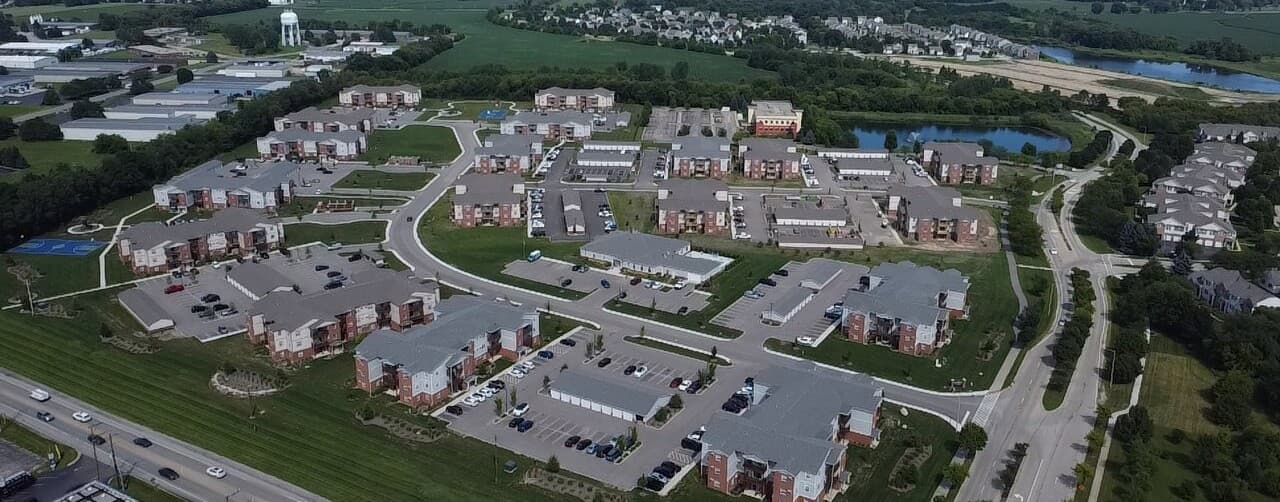
Cunat Exchange X DST is a new Delaware statutory trust formed on July 30, 2026 pursuant to a Trust Agreement dated as of July 30, 2026, which is attached hereto as Exhibit A. The Trust acquired the following 540-unit multifamily residential complex with approximately 236,412 rentable square feet on approximately 3.97 acres located at 1840 Aastri Drive, McHenry, Illinois 60050 and commonly known as The Residences of Fox Meadows. Cunat, Inc., an Illinois corporation is the Sponsor of this Offering and the present owner of the Trust. The Residences of Fox Meadows is a 540-unit multifamily property comprised of 18 three 3-story buildings with an aggregate of approximately 236,412 rentable square feet on approximately 3.97 acres located 1840 Aastri Drive, McHenry, Illinois 60050. The improvements are considered to be in good overall condition. The Property has 1,083 parking spaces. The Property was constructed in 2024 to 2025. The Property is a brand new construction apartment community located in the growing city of McHenry, Illinois. It offers spacious one-bedroom, one-bedroom with den, and multiple two-bedroom/two-bathroom floor plans. Each newly constructed residence features contemporary finishes and premium conveniences, including, but not limited to a fully equipped kitchen with stainless steel appliances, a full-size washer and dryer, individually controlled heating and air conditioning, and a private balcony or patio, as well as secure intercom-access buildings, garages, 24-hour maintenance. Resident amenities include, but are not limited to, a fitness center, indoor heated swimming pool, outdoor swimming pool, basketball courts, and playground areas. The community center also features a spacious party and meeting room. The Property is located near schools, shopping, restaurants, transportation, and recreational destinations. Pet-friendly accommodations are also available. The Trust purchased the Property with a new loan in the amount of $84,375,000 as set forth below obtained from JLL Real Estate Capital, LLC, a Delaware limited liability company, pursuant to Freddie Mac’s multifamily lending program, which Loan closed on the Loan Closing Date and is secured by the Property. The Loan has a term of 10 years and is interest only at a fixed rate equal to 5.43% per annum with interest only payments for the entire term of the Loan.
CS1031 Texas Active Living New Braunfels, DST
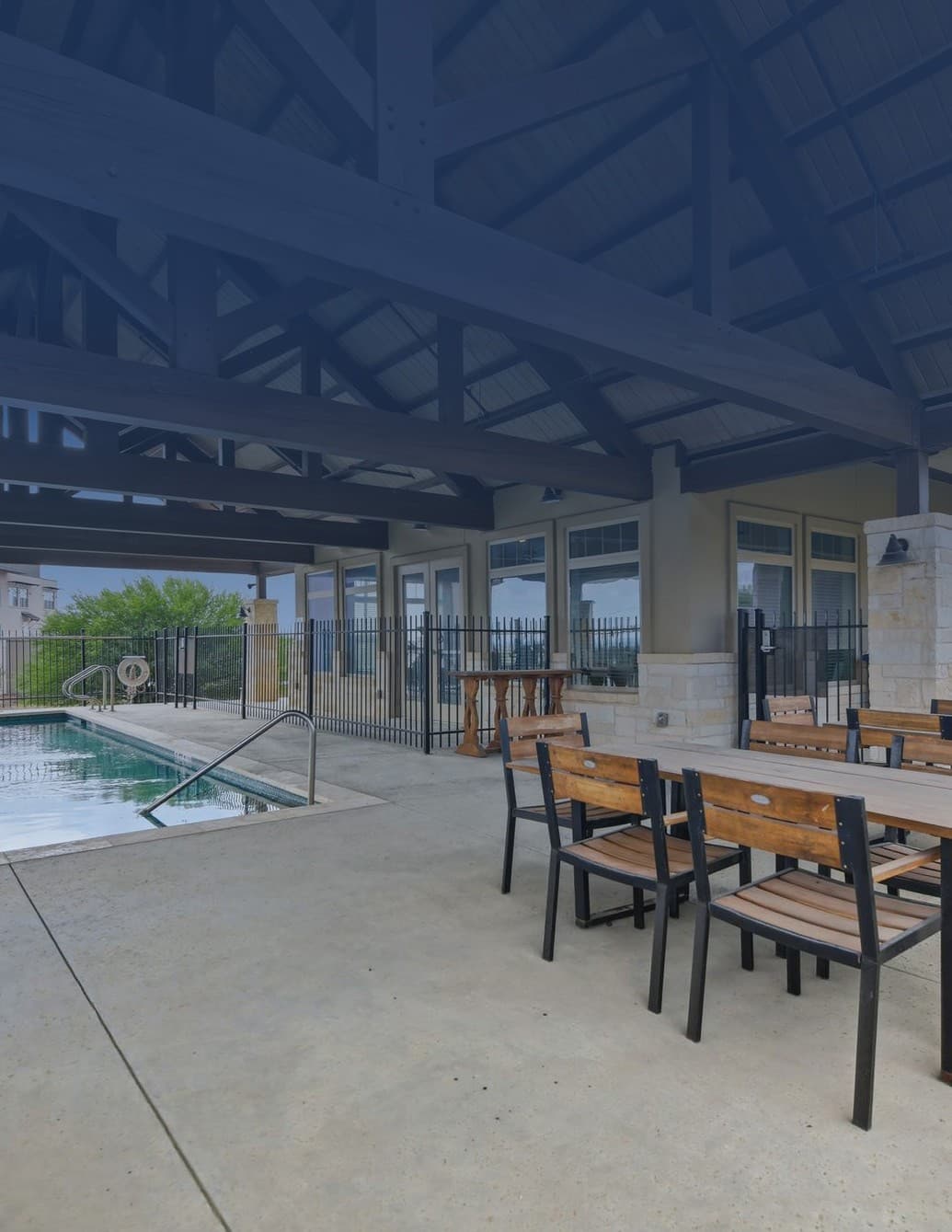
CS1031 Texas Active Living New Braunfels, DST, a Delaware statutory trust, has been formed for the purpose of acquiring Emerald Cottages of New Braunfels, a recently constructed, boutique active adult community with 72 single-family-style cottage homes, located at 3025 Oak Run Parkway, New Braunfels, Texas 78132. The Property was completed in 2024 and is comprised of 17 single-story residential buildings and one standalone clubhouse with an outdoor pool, situated on approximately 11 acres of land. The Property consists of 12 one-bedroom, one-bathroom units and 60 two-bedroom, two-bathroom units, with an average unit size of 1,275 square feet. The cottage homes at the Property were designed with the active adult demographic in mind. Open floor plans feature granite and stone countertops, wood and carpet flooring, a fully equipped kitchen with stainless steel appliances, dishwasher, disposal and microwave, an in-unit washer and dryer, central heating and cooling, and accessibility features throughout including zero-threshold showers. Each unit features a private entrance and an attached garage. Community amenities center on the clubhouse, which houses a fitness room, business center, and dining room, and extends to a swimming pool and a BBQ and picnic area. On-site management maintains a regular social calendar of exercise classes, community events, and entertainment for residents. New Braunfels is located in Comal County, strategically positioned between San Antonio and Austin. The city has an estimated population of approximately 122,000, while Comal County totals roughly 209,000 residents. New Braunfels sits about 34 miles northeast of San Antonio and 48 miles south of Austin, providing convenient access to both major employment centers while maintaining a distinct local identity. The county’s median household income is approximately $101,889, reflecting an affluent and growing suburban market. The Property is in the process of completing its initial lease-up. As of the date of this Memorandum, the Property was approximately 87.5% occupied and 91.7% leased.
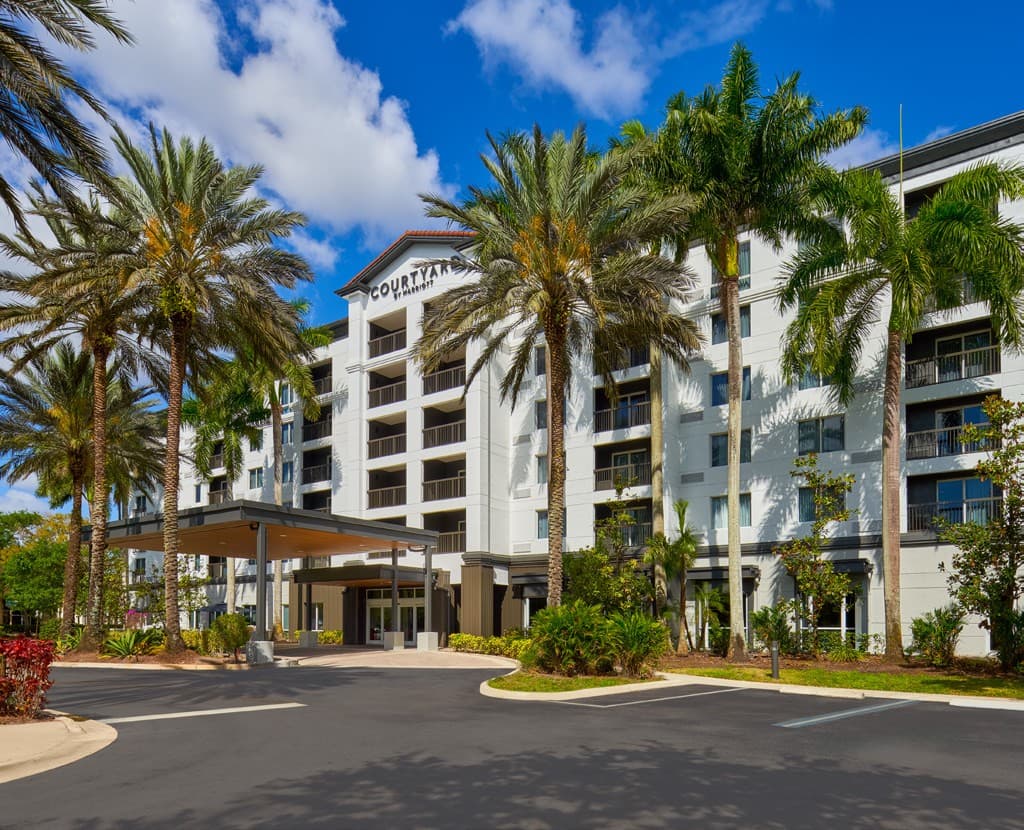
Driftwood Hotel Income I, DST
The Trust owns a fee simple interest in the land and improvements located at 2000 N. Commerce Parkway, Weston, FL 33326, which includes the Courtyard Fort Lauderdale Weston hotel property that is located in a sought-after suburban market of Florida. The Hotel is a recently renovated 176-key, six story building that also includes The Bistro, an on-site food and beverage outlet, and three functional meeting spaces. The Hotel benefits from a large corporate and medical office presence that drives year-round lodging demand. The Hotel completed approximately $5 million in guest-facing renovations to rooms and public spaces in 2024, which positions it well for new ownership to drive further income growth. Pursuant to the Franchise Agreement, the Hotel is operated under the name Courtyard by Marriott, which is a brand of Marriott International, Inc.

NexPoint Marina II DST
We are pleased to present the NexPoint Marina II DST, an offering comprised of two stabilized, full-service marina assets with demonstrated demand, high occupancy, and embedded growth potential. Located in Tennessee and Kentucky both properties are characterized by strong underlying demand and limited slip availability. The Stardust Property (located in Andersonville, TN) and the Kuttawa Property (located in Kuttawa, KY) each serve as a regional destination marinas. Given their close proximity to Knoxville and Nashville, respectively, they both draw local and visiting boaters to their waterfront sites. They benefit from established operating histories, strategic locations within highly trafficked recreational boating corridors, the durable fundamentals of the U.S. recreational boating market, and diversified revenue streams that include fuel, food & beverage, retail, and rental offerings which enhance the Master Tenants' ability to meet their Master Lease obligations. Importantly, we believe both assets offer embedded growth potential through recently completed and planned slip expansions, positioning the portfolio to capture waitlist demand and drive incremental revenue. The Sponsor believes that the Properties present an attractive long-term investment opportunity due to, in part, favorable submarket demographics, nearby retail drivers, continued and strengthening demand for Marina Properties, constrained supply of Marina Properties, the high quality of each asset, swift physical occupancy lease-up velocities, and the long-term strength of the sector.
Disclosure
Tax Complexity and Investment Risk
Tax laws and regulations, including but not limited to Internal Revenue Code Section 1031, bonus depreciation rules, cost segregation studies, and other tax strategies, contain complex concepts that may vary depending on individual circumstances. Tax consequences related to real estate investments, depreciation benefits, and other tax strategies discussed herein may vary significantly based on each investor's specific situation and current tax legislation. Anchor1031, LLC and Quincy Wells Capital, LLC make no representation or warranty of any kind with respect to the tax consequences of your investment or that the IRS will not challenge any such treatment. You should consult with and rely on your own tax advisor about all tax aspects with respect to your particular circumstances. Please note that Anchor1031 and Quincy Wells Capital, LLC do not provide tax advice.

The information contained in this article is for general educational purposes only and does not constitute legal, tax, investment, or financial advice. This content is not a recommendation or offer to buy or sell securities. The content is provided as general information and should not be relied upon as a substitute for professional consultation with qualified legal, tax, or financial advisors.
Tax laws, regulations, and IRS guidance regarding 1031 exchanges, opportunity zone investments, and related real estate strategies are complex and subject to change. Information herein may include forward-looking statements, hypothetical information, calculations, or financial estimates that are inherently uncertain. Past performance is never indicative of future performance. The information presented may not reflect the most current legal developments, regulatory changes, or interpretations. Individual circumstances vary significantly, and strategies that may be appropriate for one investor may not be suitable for another.
All real estate investments, including 1031 exchanges and opportunity zone investments, are speculative and involve substantial risk. There can be no assurance that any investor will not suffer significant losses, and a loss of part or all of the principal value may occur. Before making any investment decisions or implementing any 1031 exchange strategies, readers should consult with their own qualified legal, tax, and financial professionals who can provide advice tailored to their specific circumstances. Prospective investors should not proceed unless they can readily bear the consequences of potential losses.
While the author is a partner at Anchor1031, the views expressed are educational in nature and do not guarantee any particular outcome or create any obligations on behalf of the firm or author. Neither Anchor1031 nor the author assumes any liability for actions taken based on the information provided herein.