
Why 1031 Exchange Investors Are Moving Into Oil and Gas
A 1031-eligible asset class that generates passive income with no operational involvement, offers tax advantages that may exceed what most real estate investors are used to, and is considered one of the most privileged asset classes in the country.

Key Takeaways for 1031 Exchange Investors
- Oil and gas mineral interests are classified as real property under IRC Section 1031, making them eligible replacement property in a 1031 exchange.
- Investors collect 12.5% to 25% of production revenue as royalties with zero drilling costs, zero operational involvement, and zero capital expenditures.
- Percentage depletion may shelter 15% of gross royalty income from taxes each year, and unlike real estate depreciation, it does not expire when basis reaches zero.
- Oil and gas investments carry risks including commodity price volatility, well depletion, and illiquidity. All investments carry risk, including the possible loss of principal.
Why 1031 Exchange Investors Are Looking at Oil and Gas
Oil and gas is the newest asset class we are now offering to both 1031 exchange and cash investors on the Anchor1031 platform. It is a 1031-eligible asset class tied to oil and gas production that generates passive income with no operational involvement, offers tax advantages that may exceed what most real estate investors are used to, and is considered one of the most privileged real estate asset classes that exist today.
If this is new territory for you, you're not alone. Outside of Texas and Oklahoma, most investors have never been introduced to this side of the market. But institutions have been paying attention for years. Major pension funds, endowments, and private equity firms have been building mineral portfolios for the past decade. Warren Buffett's Berkshire Hathaway accumulated nearly 29% of Occidental Petroleum, signaling long-term confidence in Permian Basin energy assets.10
How Oil and Gas Qualifies as a 1031 Exchange Replacement Property
Under Treasury Regulation Section 1.1031(a)-3, the IRS defines "unsevered natural products of land," including mines, wells, and other natural deposits, as real property for purposes of Section 1031.1 That means oil and gas mineral interests are classified the same way as any other piece of real estate, and you can potentially sell an investment property and exchange into oil and gas, deferring your capital gains the same way you would with any other like-kind replacement property.
For a detailed breakdown of which specific oil and gas investments qualify (mineral rights, royalty interests, working interests, DPPs) and how the exchange mechanics work step-by-step, see our complete oil and gas 1031 exchange guide.
What Is the Difference Between the Surface Estate and the Mineral Estate?
In real estate, there are two estates. The surface estate is the building and the land you can see. This is what most investors think of when they hear "real estate." The mineral estate is everything beneath the surface: the oil, the natural gas, and the rights to extract them. Both are classified as real property. Both can be bought, sold, and exchanged.

Surface Estate and Mineral Estate: How oil and gas ownership works beneath the surface.
The United States is one of the only countries in the world where individuals can privately own mineral rights. In most other countries, the government owns what's beneath the surface. Here, private ownership of the mineral estate is what creates the ability to hold, transfer, and exchange these interests the same way you would any other piece of real property.
And because many of these minerals are privately owned in Texas, they aren't subject to the federal drilling restrictions that apply to government-owned minerals in states like New Mexico or on offshore federal lands.
How You Get Paid as an Oil and Gas Investor
When you own oil and gas mineral rights, you own what's beneath the surface. An oil and gas operator (think ExxonMobil, Chevron, ConocoPhillips) leases the right to drill on your property, and in return, you receive a royalty on every barrel of oil or cubic foot of gas produced. You bear none of the drilling costs, none of the operational risk, and none of the capital expenditures. The operator handles that responsibility while you collect 12.5% to 25% of revenue as the mineral rights owner.
As operators drill new wells on your mineral rights over time, your income and asset value can potentially grow without you spending a dollar. They invest the capital, take the drilling risk, and you collect a royalty on every barrel produced. However, the timing and extent of new drilling activity is driven by operator economics and commodity prices and cannot be guaranteed.
An Analogy for Real Estate Investors
Imagine you buy a fully occupied five-story building. Your tenants pay you rent. But every year, those tenants come to you and say, "We're going to add another story on top of this building at no cost to you, and you'll collect rent on the new floors too." Five years later, you potentially own a ten-story building that cash flows more and is worth more than when you bought it. This is why some in the industry consider oil and gas mineral rights one of the most privileged asset classes in the country: where else can someone else develop your property at their own expense while paying you a share of the profits?
Oil and Gas Royalties vs Rental Income: A Comparison for DST Investors
| Traditional Real Estate | Oil and Gas Mineral Rights | |
|---|---|---|
| Who pays for improvements? | You do | Operator pays for all development |
| Can tenants leave? | Yes, at lease end | Production is tied to the land |
| Management required? | You manage or pay someone to | Zero operational involvement |
| Tax deduction duration | Depreciation tied to basis, eventually expires | Percentage depletion may last as long as you own the asset |
The Scale of the Oil and Gas Industry Behind Your Investment
U.S. crude oil production hit an all-time high of 13.6 million barrels per day in July 2025, and the EIA projects output will hold near that level through 2026.2 The Permian Basin alone accounts for roughly half of all U.S. crude production. If it were a country, it would be the third largest oil producing nation in the world, behind only Saudi Arabia and Russia.3
And after trillions of dollars invested in renewables, the world is still more than 80% dependent on fossil fuels.4 Even under scenarios that assume significant new clean energy policies, most major forecasts project fossil fuels will still supply 50-70% of global energy in 2050.5 The energy transition is real, but it's measured in decades, not years. And oil prices reflect this: Brent crude topped $100 a barrel in March 2026 amid escalating geopolitical tensions.6
Why Oil and Gas Has Low Correlation to Real Estate DSTs
Traditional real estate is a highly levered, interest-rate-sensitive asset class. Oil and gas mineral rights are typically held as full equity positions with no leverage. This has historically resulted in mineral rights having a low correlation to traditional real estate. For example, in 2022, the S&P 500 Energy sector returned approximately 59%, while the FTSE Nareit All Equity REITs Index declined approximately 25%. For 1031 exchange investors who already hold DST investments in multifamily or NNN properties, oil and gas may offer meaningful portfolio diversification. However, past performance is not indicative of future results, and diversification does not guarantee against loss.
Oil and Gas Tax Advantages That Go Beyond Real Estate Depreciation
If you're a 1031 investor, you already understand how depreciation works in real estate. You shelter a portion of your rental income each year, which may improve your after-tax return. Oil and gas has its own version of this, and in some ways, it may be even more favorable.
What Is Percentage Depletion and How Does It Compare to Depreciation?
It's called percentage depletion, and it allows oil and gas mineral rights owners to potentially shelter 15% of their gross royalty income from taxes each year.7 Here's what makes this different from depreciation: it does not run out. That means only about 85% of your royalty income may be taxable, year after year, for the life of the holding. This benefit is subject to certain IRS limitations and individual tax circumstances.
| Real Estate Depreciation | Oil and Gas Percentage Depletion | |
|---|---|---|
| Shelters income from taxes | Yes | Yes |
| Tied to cost basis | Yes | No, based on gross income |
| Expires or recaptures on sale | Yes, recapture at sale | No recapture, no expiration |
| Works with eroded basis from prior 1031 exchanges | Limited benefit | 15% of gross income sheltered regardless of basis |
For a deep dive into how cost depletion and percentage depletion actually work year-by-year for 1031 exchange investors, including examples with specific basis amounts, see our complete guide to oil and gas tax advantages for 1031 investors.
Current Oil & Gas Programs
Available through Anchor1031 for accredited investors

Canyon State Minerals, LLC
Canyon State Minerals represents a diversified portfolio of royalty assets historically delivering both income and growth to accredited investors. Canyon State Minerals, LLC, a wholly-owned subsidiar
Montego Minerals

Texakoma Resources Partners ‘26, LP
The primary objective of the Partnership will be to provide investors with the opportunity to realize cash flows and tax benefits by participating with experienced operators in the drilling of oil and
Texakoma Resources, LLC
MDS 2026-Shale Development, LP
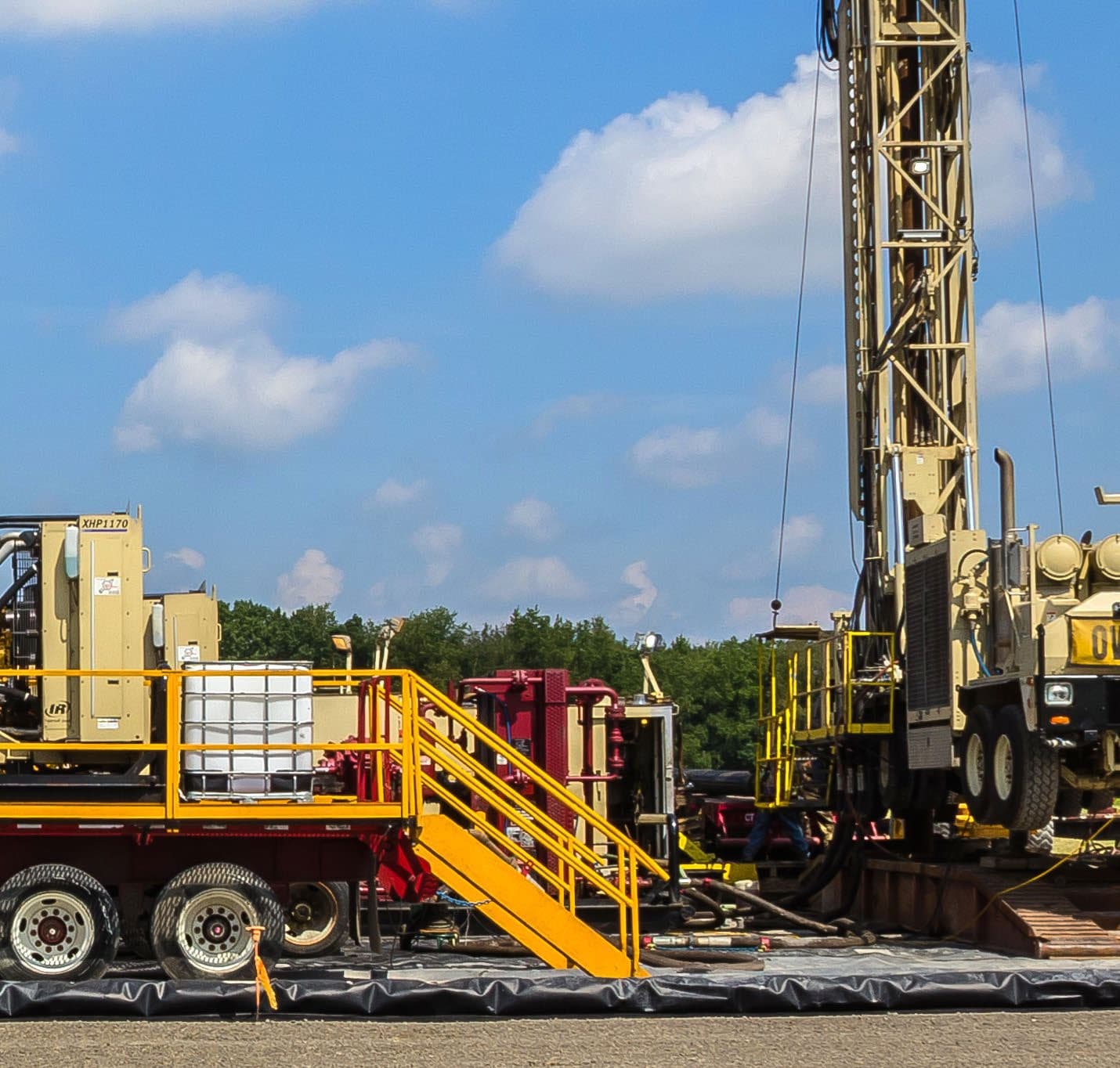
The Partnership is a Delaware limited partnership formed on October 9, 2025 for the purpose of drilling horizontal wells as discussed below. The Partnership's investment objective is to invest its su
MDS Energy Development, LLC
U.S. Energy Private Capital III LP
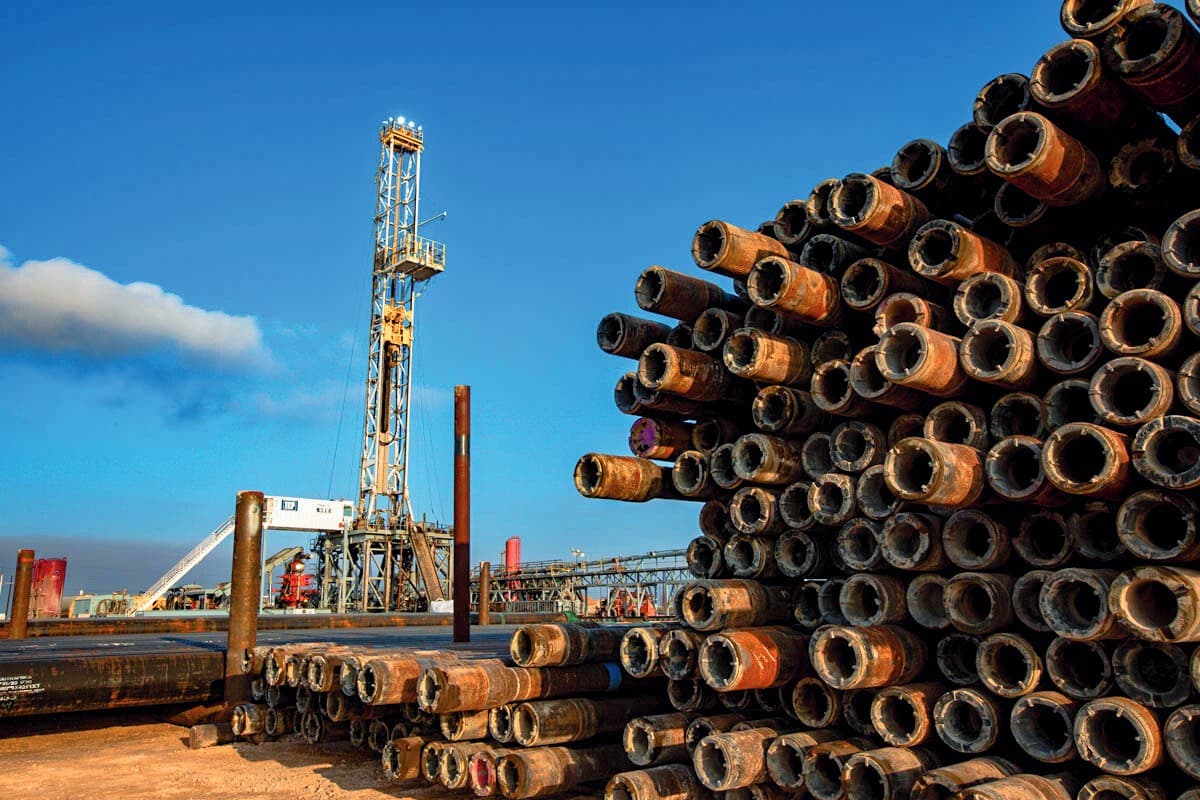
The Partnership is being formed for the purpose of investing in and developing projects in a range of asset classes including oil and gas, Alternative Energy Projects, and other energy-related assets
U.S. Energy Development Corporation

Montego Capital Fund 5 Ltd
Montego's Capital Fund 5 represents an investment portfolio providing accredited investors access to mineral and royalty assets providing both income and growth. The Montego Capital Fund 5 allows inve
Montego Energy Partners, LLC

USEDC Opportunity Zone IV LP
The Partnership aims to generate long-term, tax-advantaged value through active energy development aligned with Opportunity Zone incentives located in designated areas including oil & gas leases, work
U.S. Energy Development Corporation

RGP Income Fund II, LP
RGP Income Fund II, LP, a Delaware limited partnership, has been formed as an oil and gas income and development partnership for the principal purpose of building a portfolio of oil and gas reserves a
Renaissance Growth Partners, LLC

Waveland Resource Partners VIII, L.P..
Waveland Energy Partners specializes in energy-focused investments. Waveland's Total Return Income & Growth Strategy focuses on acquiring minority interests in drill-ready, proven reserves in the Unit
Waveland Energy Partners, LLC
Understanding the Risks of Oil and Gas Investments
Although this asset class has its potential benefits, it is not a speculative bet on a niche industry, nor is it without risk. Investors should carefully consider the following before committing capital.
What Are the Risks of a 1031 Exchange Into Oil and Gas?
Wells are depleting assets.
Production from any individual well declines over time without new drilling activity. Mineral rights owners bear no drilling or operating costs, and in prolific basins like the Permian, there may be strong economic incentive for operators to continue developing new wells. However, the timing of new well development is driven by operator economics and cannot be guaranteed.
Commodity prices are volatile.
Royalty income is directly tied to oil and gas prices, and WTI crude has ranged from roughly $32 to over $100 per barrel in the last six years. Because mineral rights holders bear no operating costs, the investment may remain cash-flow positive in lower price environments, but distributions are never guaranteed.
Oil and gas investments are illiquid.
Mineral rights interests cannot easily be sold on a secondary market. Investors should plan to hold for the duration of the investment.
Legislative risk exists.
Prior administrations have proposed eliminating oil and gas tax incentives. However, percentage depletion and related provisions have been in the tax code for over a century, survived the 1986 Tax Reform Act, and were further reinforced by the One Big Beautiful Bill Act signed in 2025.
The quality of the underlying mineral portfolio matters: where the assets are located, how active the operators are, and how deep the inventory of future drilling locations runs. The Permian Basin, for example, can support 10 or more stacked horizontal drilling zones per section across formations like the Wolfcamp, Bone Spring, and Spraberry, which means a well-positioned mineral interest may benefit from decades of additional development.9 However, there is no guarantee that operators will drill or that future production will meet expectations.
For a complete analysis of oil and gas investment risks, see our oil and gas investment risks guide.
How Anchor1031 Helps 1031 Investors Evaluate Oil and Gas
At Anchor1031, we now offer 1031-eligible oil and gas structures that allow exchange investors to defer their capital gains while moving into an entirely different asset class with historically low correlation to traditional real estate and the broader stock market.
Not every offering makes it through the formal due diligence process that our broker-dealer puts these offerings through. We evaluate the quality of the mineral portfolio, operator track records, basin economics, and the legal structure supporting the 1031 exchange qualification before anything reaches our marketplace.
If you're in an exchange right now, considering one, or looking for ways to deploy non-1031 capital into this space, we're happy to walk through it with you.
Browse Current Oil and Gas Offerings
View curated oil and gas, multifamily, NNN, and other investment properties available now.
Build a Custom Portfolio
Diversify your 1031 exchange across oil and gas, DSTs, and other asset classes.
Schedule a Call
Walk through oil and gas offerings and how they fit your exchange.
Frequently Asked Questions About Oil and Gas 1031 Exchanges
Can you 1031 exchange into oil and gas?
Yes. Oil and gas mineral interests are classified as real property under Treasury Regulation Section 1.1031(a)-3. An investor can sell investment real estate and exchange into oil and gas mineral rights, deferring capital gains the same way they would with any other like-kind replacement property. For the full mechanics, see our oil and gas 1031 exchange guide.
Can I exchange a rental property for oil and gas interests?
Yes. Section 1031 requires like-kind real property, but 'like kind' is defined broadly. Any real property held for investment can be exchanged for any other real property held for investment. A rental property and oil and gas mineral rights are both real property held for investment, making this a qualifying like-kind exchange.
What is the minimum investment for oil and gas through a 1031 exchange?
Minimum investments for oil and gas offerings structured for 1031 exchanges typically start at $100,000, though this varies by sponsor and offering. Investors can allocate a portion of their exchange proceeds to oil and gas and the remainder to other replacement properties such as DSTs.
Are oil and gas royalties passive income or portfolio income?
Royalty income from oil and gas mineral rights is classified as portfolio income under IRC Section 469, not passive income. This means it cannot offset passive losses from rental properties, DSTs, or other passive real estate investments. This is an important distinction to discuss with your CPA. Learn more in our oil and gas tax advantages guide.
Can I combine oil and gas with DSTs in one 1031 exchange?
Yes. You can identify and acquire multiple replacement properties in a single 1031 exchange, including a mix of oil and gas mineral rights, multifamily DSTs, NNN lease DSTs, industrial DSTs, or other qualifying real property. Diversifying across asset classes is a common risk management strategy.
What happens if oil prices drop after I invest?
Royalty income rises and falls with commodity prices. WTI crude oil averaged $32 per barrel in 2020 and $87 in 2022. Because mineral rights holders bear no drilling or operating costs, the investment may remain cash-flow positive in lower-price environments, but distributions are never guaranteed and may be reduced or suspended. Commodity prices are influenced by global factors outside any investor's control. All investments carry risk, including the possible loss of principal.
Sources
1 U.S. Treasury Regulation Section 1.1031(a)-3 (T.D. 9935, effective Dec. 2, 2020); Rev. Rul. 68-226.
4 International Energy Agency, Global Energy Review 2025; BloombergNEF, January 26, 2026.
5 IEA, World Energy Outlook 2025; EIA, International Energy Outlook 2023.
6 Goldman Sachs via Oilprice.com, "Goldman Sachs Hikes Brent Oil Forecast to Over $100," March 2026.
8 U.S. Energy Information Administration, WTI Crude Oil Spot Price, annual averages.
9 EIA, "Permian Basin, Part 1: Wolfcamp, Bone Spring, Delaware Shale Plays"; URTeC 2018, "Development of the Stacked Pay in the Delaware Basin."

About the Author
Trevor Sybertz, Partner
Trevor Sybertz is a Partner at Anchor1031, where he specializes in educating clients about 1031 exchanges, private real estate offerings, and REITs. With over a decade of experience in commercial real estate and capital markets, Mr. Sybertz has helped clients invest more than $100M in equity across a wide range of real estate assets and markets.
Continue Learning About Oil & Gas Investing
Oil and Gas 1031 Exchange Guide
Which investments qualify, exchange mechanics, and step-by-step process.
Oil and Gas Tax Advantages for 1031 Investors
Cost depletion vs percentage depletion: the year-by-year math for 1031 exchange investors.
Oil and Gas Royalties Guide
How royalties work, how they're taxed, and what to evaluate.
Considering Oil and Gas for Your 1031 Exchange?
Our team can help you evaluate oil and gas offerings and build a diversified portfolio tailored to your exchange.
Disclosure
Tax Complexity and Investment Risk
Tax laws and regulations, including but not limited to Internal Revenue Code Section 1031, bonus depreciation rules, cost segregation studies, and other tax strategies, contain complex concepts that may vary depending on individual circumstances. Tax consequences related to real estate investments, depreciation benefits, and other tax strategies discussed herein may vary significantly based on each investor's specific situation and current tax legislation. Anchor1031, LLC and Quincy Wells Capital, LLC make no representation or warranty of any kind with respect to the tax consequences of your investment or that the IRS will not challenge any such treatment. You should consult with and rely on your own tax advisor about all tax aspects with respect to your particular circumstances. Please note that Anchor1031 and Quincy Wells Capital, LLC do not provide tax advice.

The information contained in this article is for general educational purposes only and does not constitute legal, tax, investment, or financial advice. This content is not a recommendation or offer to buy or sell securities. The content is provided as general information and should not be relied upon as a substitute for professional consultation with qualified legal, tax, or financial advisors.
Tax laws, regulations, and IRS guidance regarding 1031 exchanges, opportunity zone investments, and related real estate strategies are complex and subject to change. Information herein may include forward-looking statements, hypothetical information, calculations, or financial estimates that are inherently uncertain. Past performance is never indicative of future performance. The information presented may not reflect the most current legal developments, regulatory changes, or interpretations. Individual circumstances vary significantly, and strategies that may be appropriate for one investor may not be suitable for another.
All real estate investments, including 1031 exchanges and opportunity zone investments, are speculative and involve substantial risk. There can be no assurance that any investor will not suffer significant losses, and a loss of part or all of the principal value may occur. Before making any investment decisions or implementing any 1031 exchange strategies, readers should consult with their own qualified legal, tax, and financial professionals who can provide advice tailored to their specific circumstances. Prospective investors should not proceed unless they can readily bear the consequences of potential losses.
While the author is a partner at Anchor1031, the views expressed are educational in nature and do not guarantee any particular outcome or create any obligations on behalf of the firm or author. Neither Anchor1031 nor the author assumes any liability for actions taken based on the information provided herein.