


Direct Participation Programs (DPPs): What Investors Need to Know
How DPPs work, their tax benefits, and what to evaluate before investing

Key Takeaway
A direct participation program (DPP) is a pass-through investment vehicle, typically structured as a limited partnership, that gives investors direct access to cash flow and tax deductions from the underlying assets. Oil and gas DPPs offer intangible drilling cost deductions and depletion allowances that are not available through corporate investment structures. Because most DPPs are structured as limited partnerships, these deductions are classified as passive losses that can shelter passive income from sources such as rental real estate and DST distributions. The limited partnership structure also caps the investor's liability at the amount invested, with no exposure to capital calls, plugging and abandonment costs, or environmental liability. DPPs are illiquid and restricted to accredited investors. Consult your CPA before committing capital.
What Is a Direct Participation Program?
A direct participation program is a business venture, typically structured as a limited partnership or limited liability company, that provides investors with direct access to cash flow and tax benefits from the underlying assets. The term originates from the Securities Act of 1933 and is governed by FINRA Rule 2310, which regulates compensation, fees, and expenses in public offerings of these programs.
Unlike stocks or mutual funds, DPPs are not traded on public exchanges. They are pass-through entities, meaning the program itself pays no tax at the entity level. Instead, all income, losses, deductions, and credits flow directly to the individual investors, who report them on their own tax returns. This pass-through structure is what gives DPPs their defining characteristic and their appeal. It also means that investors can receive tax deductions, particularly in oil and gas programs, that are not available through corporate investment vehicles.
Direct participation programs are most commonly formed in oil and gas, real estate, and equipment leasing. Most are offered under SEC Regulation D as private placements and are restricted to accredited investors who meet specific income or net worth thresholds. A DPP investment is inherently illiquid, with capital typically committed for the duration of the program.
DPP investing has also become a staple topic on the Series 7 and Series 63 licensing exams, where test-takers are expected to understand the structure, tax treatment, and suitability of these programs. For actual investors evaluating a DPP investment, the practical considerations go well beyond what the exam covers.
How Direct Participation Programs Work
The GP/LP Structure
Most direct participation programs use a general partner/limited partner structure. The general partner (GP) manages the program's operations, makes investment decisions, and bears unlimited personal liability for the obligations of the partnership. Limited partners (LPs) are the passive investors. Their liability is limited to the amount of capital they contribute.
The GP earns compensation through management fees and, in many cases, a carried interest or promoted share of profits once the LPs have received a specified return. LPs receive their proportional share of income, deductions, and distributions based on the terms of the partnership agreement. Oil and gas limited partnerships are the most recognizable example of this structure in practice.
Cash Flow and Distributions
Revenue in a DPP comes from the operations of the underlying assets. In an oil and gas program, that means production revenue from selling crude oil or natural gas. In a real estate DPP, revenue comes from rental income and, eventually, from the sale of the property. Equipment leasing programs generate income from lease payments.
Distributions to LPs are typically made on a quarterly or monthly basis, though the timing and amount depend entirely on program performance. Many partnerships use a waterfall structure, where capital is returned to LPs first, followed by a preferred return, and then a profit split between the GP and LPs. There are no guaranteed distributions. Returns depend on commodity prices, occupancy rates, lease terms, or whatever factor drives the specific program's revenue.
Pass-Through Taxation
The core tax advantage of a DPP is its pass-through structure. The entity itself does not pay federal income tax. Instead, all taxable events pass through to the individual investors via a Schedule K-1, which reports each partner's share of income, losses, deductions, and credits. Investors then report these items on their personal tax returns.
This gives investors direct access to deductions that would be unavailable in a corporate structure. In a C corporation, income is taxed at the entity level before dividends reach shareholders, who are then taxed again. A DPP eliminates that double layer.
Types of Direct Participation Programs
Oil and Gas DPPs
Oil and gas programs are the most common type of DPP. Investors contribute capital to fund drilling operations and, in return, receive a share of production revenue along with substantial tax deductions. The most significant of these deductions is for intangible drilling costs (IDCs), which typically represent 60 to 80 percent of total well costs and can be deducted in full in the year they are incurred.
Oil and gas DPPs carry meaningful risk, including the possibility that wells produce little or no oil. But for investors in high tax brackets, the combination of immediate deductions and potential production income makes them a distinct category within the alternative investments landscape.
Real Estate DPPs
Real estate direct participation programs pool investor capital to acquire or develop commercial properties. Income is generated from rental payments, and investors benefit from depreciation deductions that pass through on their K-1. Upon sale of the property, investors share in any capital gains.
Real estate DPPs tend to offer more predictable cash flow than oil and gas programs, but with less aggressive first-year tax deductions. It is worth noting that Delaware Statutory Trusts (DSTs) are a separate legal structure and are not technically classified as DPPs, though both involve pooled real estate investment. Investors interested in the DST structure can review the differences in our guide to DST investments.
Equipment Leasing DPPs
Equipment leasing programs purchase tangible assets such as aircraft, railcars, or shipping containers and lease them to commercial operators. Investors receive lease income and depreciation deductions that flow through the partnership. These programs occupy a smaller segment of the DPP market compared to oil and gas or real estate, and they tend to appeal to investors seeking moderate, steady returns with some tax benefit.
Other DPP Types
Agricultural programs, film production ventures, and research and development partnerships also fall under the DPP umbrella. These are niche categories with smaller investor bases and are less frequently offered by major broker-dealers. They follow the same pass-through taxation principles but carry their own industry-specific risk profiles.
Oil and Gas DPPs: A Closer Look
Exploratory (Wildcat) Programs
Exploratory programs, often called wildcat programs, drill in unproven areas where no production has been established. These carry the highest risk among oil and gas DPPs because the geological success rate is inherently uncertain. If a well comes in, returns can be significant. If it does not, the investor may lose all or most of the capital allocated to that well.
The trade-off is that exploratory programs tend to offer the largest IDC deductions as a percentage of total investment, because a greater share of the costs in an unproven area are intangible.
Developmental Drilling Programs
Developmental programs drill near proven reserves in established producing fields. Because the geology is better understood, these programs carry lower risk than exploratory ventures. The probability of hitting a productive zone is substantially higher, though the potential upside per well may be more modest.
Developmental drilling programs are the most commonly offered type of oil and gas DPP. They appeal to investors who want meaningful tax deductions and a reasonable expectation of production income, without the binary risk profile of wildcat drilling.
Workover and Re-completion Programs
Workover programs focus on reworking existing wells to restore or increase production. This might involve re-perforating a casing, stimulating a formation, or recompleting a well in a different producing zone. The cost per well is generally lower than a new drill, and the IDC deduction potential is correspondingly smaller.
These programs carry a generally lower risk profile because they operate on wells with known production histories. They are appropriate for investors who want some exposure to oil and gas tax benefits without the volatility of new drilling.
How Oil and Gas DPPs Generate Returns
Revenue in an oil and gas DPP comes from selling produced oil and natural gas at prevailing market prices. After deducting operating expenses, the remaining net revenue is distributed to LPs according to the partnership terms.
Production from any well declines over time following a predictable curve. Early months typically generate the highest revenue, with output tapering as reservoir pressure decreases. Tax deductions from IDCs, depletion, and depreciation enhance the after-tax return on those distributions. The combination of revenue and tax benefits distinguishes oil and gas DPPs from other income-producing investments, though neither revenue nor tax treatment is guaranteed.
Tax Benefits of Direct Participation Programs
Intangible Drilling Cost (IDC) Deductions
Intangible drilling costs are the non-salvageable expenses associated with drilling and completing an oil or gas well. They include labor, fuel, drilling fluids, site preparation, surveys, and ground clearing. IDCs typically account for 60 to 80 percent of a well's total cost, with the remaining 20 to 40 percent classified as tangible equipment costs.
Under IRC Section 263(c), independent producers can elect to deduct 100 percent of IDCs in the year they are incurred, provided the well is operational by March 31 of the following year. This deduction has been available in some form since 1913. Integrated oil companies face a different treatment: they may deduct 70 percent immediately and must amortize the remaining 30 percent over 60 months.
For a DPP investor, the practical impact is significant. An investment of $100,000 in a program where 75 percent of costs are intangible could produce roughly $75,000 in first-year deductions, reducing current-year tax liability by a meaningful amount depending on the investor's marginal rate.
Depletion Allowances
As oil and gas are extracted, investors can recover a portion of their investment through depletion deductions. Cost depletion allows the investor to deduct a pro-rata share of the property's cost basis as the resource is produced. Percentage depletion, available to qualifying independent producers and royalty owners under IRC Section 613A, allows a flat 15 percent of gross revenue to be deducted regardless of the property's cost basis.
Percentage depletion is notable because it can exceed the investor's original cost basis, providing ongoing tax benefits for the life of a producing well. To qualify, the producer must maintain average daily production below 1,000 barrels of oil or 6 million cubic feet of natural gas.
Depreciation of Tangible Assets
The tangible equipment used in oil and gas production, including wellhead equipment, casing, tubing, and pumping units, is depreciated under the Modified Accelerated Cost Recovery System (MACRS). Most of this equipment falls into the 7-year property class, though some components qualify as 5-year property. These deductions are smaller than IDCs but provide additional tax benefit over the early years of a well's productive life. Investors familiar with bonus depreciation rules for real estate will recognize the general framework.
Active vs. Passive Income Classification
One of the most important tax distinctions in oil and gas investing is the treatment of working interests under the passive activity rules. Under IRC Section 469(c)(3), a working interest in an oil or gas property is specifically excluded from the definition of a passive activity, provided the taxpayer holds the interest directly or through an entity that does not limit liability. Material participation is not required for this exception to apply.
This means that losses from a qualifying working interest can offset wages, salary, business income, and other forms of active income. It is a unique carve-out in the tax code that does not exist for real estate, equipment leasing, or most other investment categories. However, qualifying for this exception requires the investor to hold the interest without limited liability protection. Under this structure, the investor assumes unlimited personal liability for partnership obligations on a joint and several basis, including potential exposure to capital calls, plugging and abandonment costs, environmental cleanup liability, and self-employment tax on production income. If another partner defaults on their share of an obligation, any individual partner can be held liable for the full amount. Most oil and gas DPPs are structured as limited partnerships, where investors are limited partners and their losses are classified as passive under IRC Section 469. These passive losses can offset passive income from sources such as rental real estate, DST distributions, and other passive investments. For real estate investors with existing passive income, the limited partnership structure provides meaningful tax shelter while capping the investor's risk at the amount of capital committed. Consult a qualified CPA or tax attorney to evaluate which structure is appropriate for your situation.
Tax disclaimer: The information in this section is for educational purposes only and should not be construed as tax advice. Tax rules are complex and subject to change. Consult a qualified CPA or tax attorney before making investment decisions based on tax considerations.
DPP vs. REIT: Key Differences
Investors evaluating pooled real estate or energy investments often compare direct participation programs with real estate investment trusts (REITs). While both provide access to income-producing assets, the structures differ in important ways.
| Feature | DPP | REIT |
|---|---|---|
| Liquidity | Illiquid; no secondary market | Publicly traded or non-traded with redemption options |
| Taxation | Pass-through; direct deductions to investors | Dividend income taxed as ordinary income |
| Minimum Investment | Typically $25,000 to $100,000 | Varies; $15,000 to $25,000 for non-traded |
| Investor Involvement | May include active participation | Fully passive |
| Risk Profile | Concentrated in a single program or small group of assets | Diversified across a portfolio of properties |
| 1031 Eligibility | Not eligible | Not eligible (but DSTs are) |
| Regulatory Framework | SEC Regulation D (private) | SEC-registered |
Investors who prioritize liquidity and diversification may find REITs more suitable. Those seeking direct tax deductions and willing to accept illiquidity may prefer a DPP. For a detailed comparison of DSTs and REITs, see our DST vs. REIT analysis.
Risks of Investing in DPPs
Direct participation programs carry risks that investors must evaluate before committing capital.
Illiquidity is the most fundamental constraint. DPP interests are not traded on any exchange, and there is generally no secondary market. Capital is locked for the duration of the program, which may range from three to ten years or longer.
Capital loss is a real possibility. An oil well may produce less than expected or nothing at all. A real estate project may underperform. In either case, the investor can lose part or all of the invested capital. Tax deductions may soften the economic impact of a loss, but they do not eliminate it.
Operator and GP risk is significant because the success of the program depends on the competence and integrity of the general partner. Poor management, cost overruns, or misalignment of interests between the GP and LPs can erode returns.
Commodity price risk affects oil and gas DPPs directly. Revenue is tied to prevailing market prices for crude oil and natural gas, which can be volatile and unpredictable. A well that is economically viable at $80 per barrel may generate minimal cash flow at $50.
Regulatory risk includes the possibility that changes to tax law could reduce or eliminate the deductions that make DPPs attractive. Congress periodically reviews energy tax provisions, and any modification to IDC treatment, depletion rules, or the passive activity exception could alter the economics of a DPP investment.
Concentration risk is inherent in most DPPs because the investor's capital is typically allocated to a single program or a small number of assets, rather than spread across a diversified portfolio. Investors should review the Private Placement Memorandum (PPM) thoroughly and understand the specific risks before investing. A due diligence checklist can help structure this review.
Who Should Invest in Direct Participation Programs?
DPP investing is not appropriate for every investor. Most programs require accredited investor status, which under SEC rules means an individual with a net worth exceeding $1 million (excluding a primary residence) or annual income above $200,000 ($300,000 for joint filers) in each of the past two years.
Beyond the regulatory requirement, DPPs are best suited for high-income earners who have a specific need for current-year tax deductions and are willing to accept the trade-offs that come with illiquid, concentrated investments. The ideal candidate for a direct participation program typically has a long-term investment horizon of at least three to ten years, existing diversification across other asset classes, and comfort with the possibility of partial or total capital loss.
Tax strategy should be a primary motivation, but not the only one. Investors should understand the underlying business of the program, whether that is oil and gas production, commercial real estate, or equipment leasing, and should evaluate it on its economic merits alongside its tax characteristics.
A consultation with a CPA before committing capital to any DPP is essential. The tax benefits are real, but they interact with other provisions of the tax code in ways that vary by individual. DPPs are not suitable for investors who need liquidity, those who do not meet accredited investor thresholds, or those seeking guaranteed returns.
Next Steps
Anchor1031 works with accredited investors who are evaluating oil and gas direct participation programs as part of a tax-aware investment strategy. Current offerings include working interest programs from established operators.
Investors can browse available programs through the Anchor1031 marketplace or schedule a consultation to discuss whether a DPP fits within their overall portfolio and tax plan.
Current Oil & Gas Programs
Available through Anchor1031 for accredited investors

Canyon State Minerals, LLC
Canyon State Minerals represents a diversified portfolio of royalty assets historically delivering both income and growth to accredited investors. Canyon State Minerals, LLC, a wholly-owned subsidiar
Montego Minerals

Texakoma Resources Partners ‘26, LP
The primary objective of the Partnership will be to provide investors with the opportunity to realize cash flows and tax benefits by participating with experienced operators in the drilling of oil and
Texakoma Resources, LLC
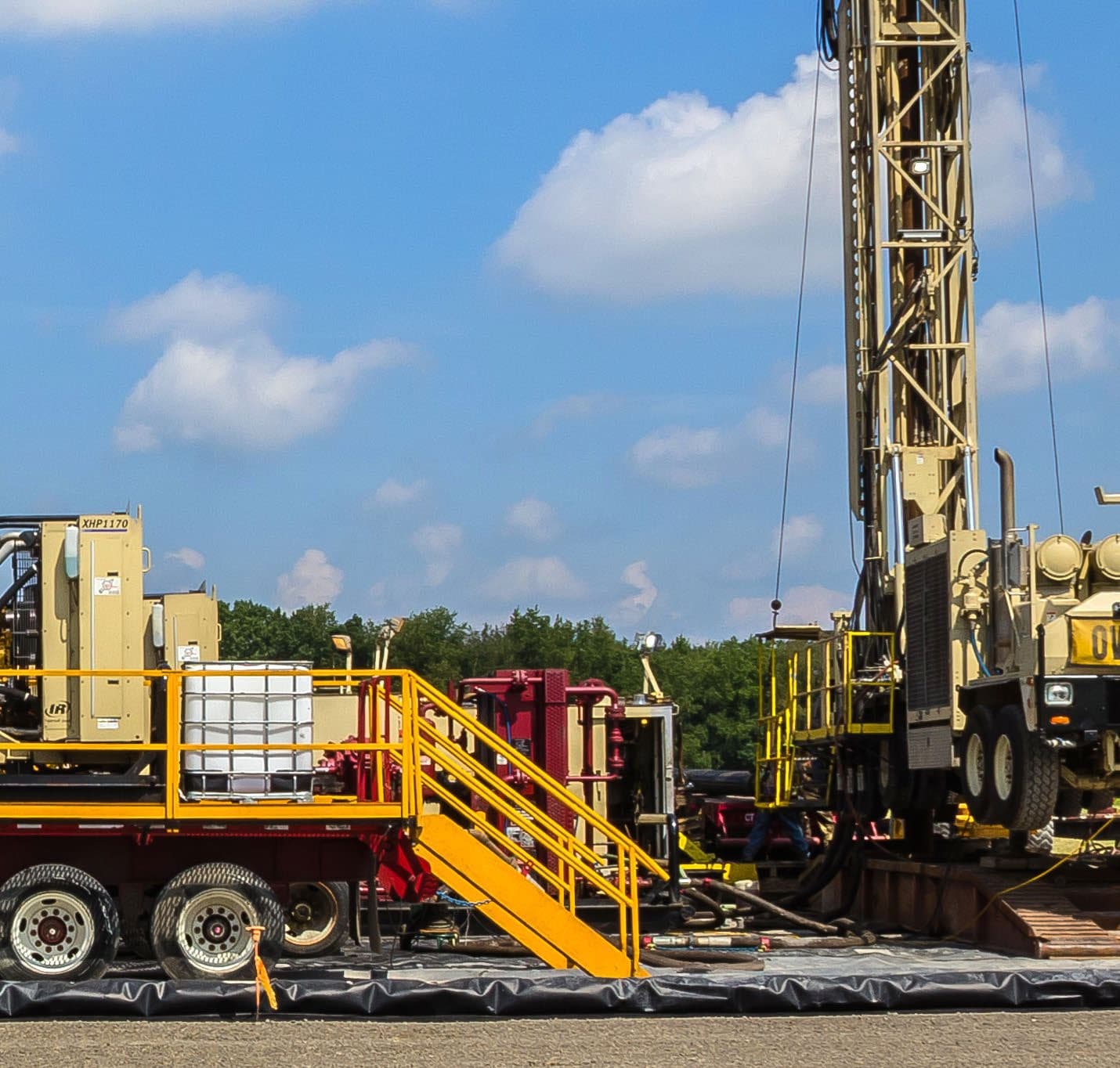
MDS 2026-Shale Development, LP
The Partnership is a Delaware limited partnership formed on October 9, 2025 for the purpose of drilling horizontal wells as discussed below. The Partnership's investment objective is to invest its su
MDS Energy Development, LLC
U.S. Energy Private Capital III LP
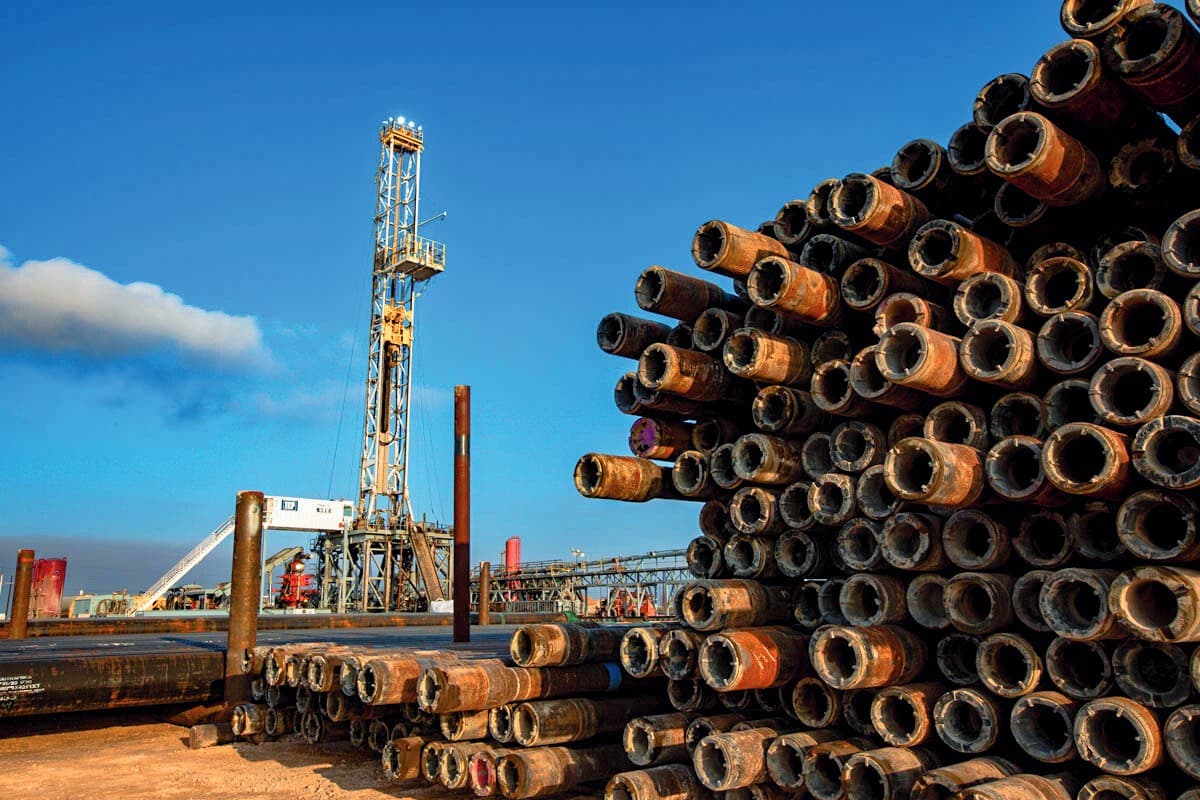
The Partnership is being formed for the purpose of investing in and developing projects in a range of asset classes including oil and gas, Alternative Energy Projects, and other energy-related assets
U.S. Energy Development Corporation

Montego Capital Fund 5 Ltd
Montego's Capital Fund 5 represents an investment portfolio providing accredited investors access to mineral and royalty assets providing both income and growth. The Montego Capital Fund 5 allows inve
Montego Energy Partners, LLC

USEDC Opportunity Zone IV LP
The Partnership aims to generate long-term, tax-advantaged value through active energy development aligned with Opportunity Zone incentives located in designated areas including oil & gas leases, work
U.S. Energy Development Corporation

RGP Income Fund II, LP
RGP Income Fund II, LP, a Delaware limited partnership, has been formed as an oil and gas income and development partnership for the principal purpose of building a portfolio of oil and gas reserves a
Renaissance Growth Partners, LLC

Waveland Resource Partners VIII, L.P..
Waveland Energy Partners specializes in energy-focused investments. Waveland's Total Return Income & Growth Strategy focuses on acquiring minority interests in drill-ready, proven reserves in the Unit
Waveland Energy Partners, LLC
Frequently Asked Questions
What is a direct participation program in simple terms?
A direct participation program is a limited partnership that allows investors to receive income, tax deductions, and other benefits directly from a business operation such as oil drilling or real estate development. Unlike a corporation, the program does not pay taxes at the entity level. All economic results flow through to the individual investors.
Are DPPs a good investment?
That depends on the investor's goals, tax situation, and risk tolerance. For accredited investors in high tax brackets who need current-year deductions and can tolerate illiquidity, a well-structured DPP can be an effective component of a broader portfolio. For investors who prioritize liquidity or need guaranteed returns, DPPs are generally not appropriate.
What is the difference between a DPP and an MLP?
Both DPPs and master limited partnerships (MLPs) are pass-through entities structured as limited partnerships. The key difference is liquidity. MLPs are publicly traded on stock exchanges and can be bought and sold like stocks. DPPs are private, illiquid investments with no secondary market. DPPs typically offer larger tax deductions because they are structured to pass through operational losses, whereas MLPs are generally profitable and distribute taxable income.
Can I lose money in a DPP?
Yes. DPPs carry the risk of partial or total capital loss. Oil and gas DPPs face dry hole risk, commodity price risk, and operator risk. Real estate DPPs can be affected by vacancy, market downturns, or development cost overruns. Tax deductions may reduce the economic impact of a loss but do not guarantee that the investor will break even.
How are DPPs taxed?
Income, losses, and deductions pass through to investors on a Schedule K-1, which is filed with the investor's personal tax return. Oil and gas DPPs provide intangible drilling cost deductions, depletion allowances, and depreciation of tangible equipment. The specific tax treatment depends on the type of DPP, the investor's level of participation, and the structure of the entity. Consult a CPA for guidance on how a DPP investment would affect your individual tax position.

About the Author
Thomas Wall, Partner
Thomas Wall is a Partner at Anchor1031, where he specializes in educating clients about 1031 exchanges, private real estate offerings, and REITs. With nearly a decade of experience in alternative investments and real estate, Mr. Wall has helped investors through hundreds of 1031 exchanges, placing over $230M of equity into real estate.
Continue Learning
Oil and Gas Investments Hub
Complete overview of oil and gas investment options, from working interests to mineral rights and 1031 exchanges.
How to Invest in Oil and Gas
Step-by-step guide to investing in oil and gas through cash placements and 1031 exchanges, including structure selection and due diligence.
Intangible Drilling Costs
Deep dive into IDC deductions, how they work, and why they make oil and gas one of the most tax-advantaged investment categories.
Ready to Explore Oil and Gas DPPs?
Browse current oil and gas programs or schedule a call to discuss how a DPP fits your investment goals and tax strategy.
Disclosure
Tax Complexity and Investment Risk
Tax laws and regulations, including but not limited to Internal Revenue Code Section 1031, bonus depreciation rules, cost segregation studies, and other tax strategies, contain complex concepts that may vary depending on individual circumstances. Tax consequences related to real estate investments, depreciation benefits, and other tax strategies discussed herein may vary significantly based on each investor's specific situation and current tax legislation. Anchor1031, LLC and Quincy Wells Capital, LLC make no representation or warranty of any kind with respect to the tax consequences of your investment or that the IRS will not challenge any such treatment. You should consult with and rely on your own tax advisor about all tax aspects with respect to your particular circumstances. Please note that Anchor1031 and Quincy Wells Capital, LLC do not provide tax advice.

The information contained in this article is for general educational purposes only and does not constitute legal, tax, investment, or financial advice. This content is not a recommendation or offer to buy or sell securities. The content is provided as general information and should not be relied upon as a substitute for professional consultation with qualified legal, tax, or financial advisors.
Tax laws, regulations, and IRS guidance regarding 1031 exchanges, opportunity zone investments, and related real estate strategies are complex and subject to change. Information herein may include forward-looking statements, hypothetical information, calculations, or financial estimates that are inherently uncertain. Past performance is never indicative of future performance. The information presented may not reflect the most current legal developments, regulatory changes, or interpretations. Individual circumstances vary significantly, and strategies that may be appropriate for one investor may not be suitable for another.
All real estate investments, including 1031 exchanges and opportunity zone investments, are speculative and involve substantial risk. There can be no assurance that any investor will not suffer significant losses, and a loss of part or all of the principal value may occur. Before making any investment decisions or implementing any 1031 exchange strategies, readers should consult with their own qualified legal, tax, and financial professionals who can provide advice tailored to their specific circumstances. Prospective investors should not proceed unless they can readily bear the consequences of potential losses.
While the author is a partner at Anchor1031, the views expressed are educational in nature and do not guarantee any particular outcome or create any obligations on behalf of the firm or author. Neither Anchor1031 nor the author assumes any liability for actions taken based on the information provided herein.